

 Emma James

Few areas of field service are examined as closely after the event as medical equipment. When a device comes under review, whether through a customer audit, an internal check, or an investigation, the service record is a natural place to start. The MHRA's guidance on managing medical devices gives a clear picture of what a good one contains, and it rewards reading with an engineer's eye, because much of the detail it describes can only be captured during the visit itself. So, before looking at how to record it on site, it is worth being clear on what the record should hold in the first place. What maintenance records should a medical equipment service company keep?

What Maintenance Records Should a Medical Equipment Service Company Keep?
A medical equipment service company should keep records that tie each device to its identity, its history, and the maintenance carried out on it. The MHRA's Managing Medical Devices guidance (published in 2014 and last updated in 2021) says device records should evidence a unique identifier, a full history from purchase to installation, any specific legal requirements and whether they have been met, a schedule and details of maintenance and repairs, and an end-of-life date where one is specified.
The guidance is written for healthcare organisations, who own the device record, so your medical equipment service records feed theirs. It also says service contracts should include a requirement for adequate record keeping, which makes the quality of your paperwork part of what the customer is buying. Because it is guidance rather than legislation, it does not prescribe a format, so you are free to design one that works.

What Should Medical Device Maintenance Records Capture on Each Visit?
The guidance includes a planned preventive maintenance checklist that makes a sound outline for medical equipment maintenance documentation. A complete record shows:
- Initial inspection: whether the device was clean or needed decontaminating, the settings of its controls, and each element inspected in line with the manufacturer's instructions.
- Parts replaced: each part, including the source manufacturer and method of fitting. The guidance adds that critical parts should be traceable to the supplier, so devices containing a recalled part can be identified quickly.
- Calibration: whether any element needed it, and confirmation that it followed the manufacturer's instructions.
- Performance and safety: performance tests against the manufacturer's specifications before and after maintenance.
- Return to use: controls reset to their original settings, accessories checked, and a dated "SERVICED" label showing the next due date, with every detail entered on the equipment record.
Put together, that list is a ready-made template for medical equipment engineer job sheets.
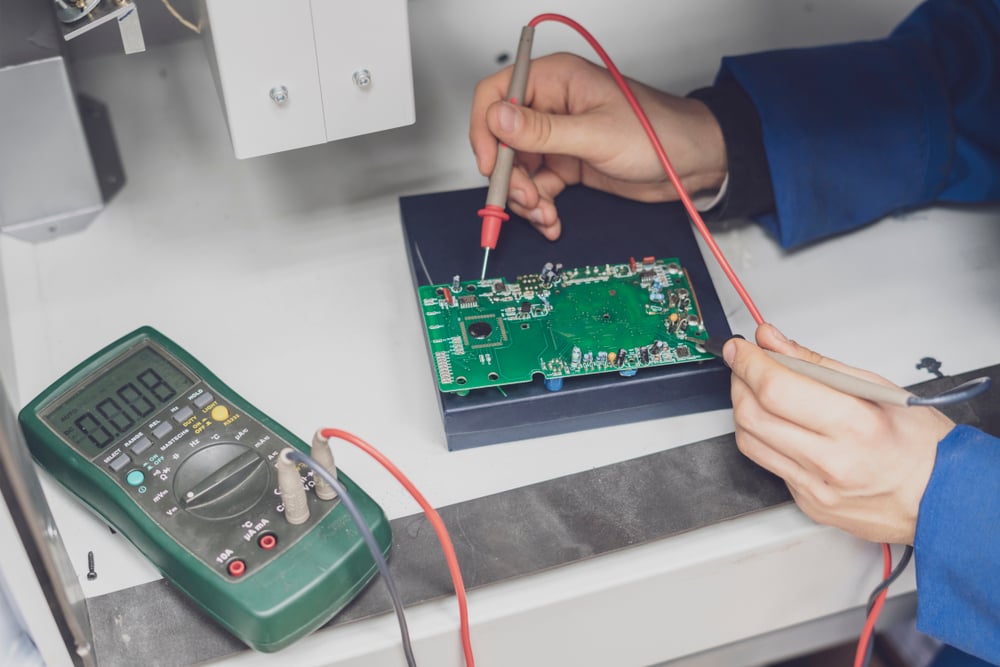
Where do IEC 62353 Test Records Fit In?
For electrical safety, the MHRA points to BS EN 62353:2014. The standard has not been designated under the UK Medical Devices Regulations 2002, but the MHRA describes it as best practice and recommends it is followed in preference to older versions. The guidance also says devices should be tested for electrical safety, where applicable, and for performance before they return to use.
Our advice is to make IEC 62353 test records as specific as the checklist above: the readings themselves, the pass or fail result, and the instrument used. The guidance expects test equipment to be adequately maintained and calibrated, so a record of which instrument took each reading is easy to defend later.

Why is Reconstructing a Service Record Later So Risky?
A job sheet that only its author can decipher is a fine way to turn a ten-minute query into a ten-day one. Records typed up back at the depot invite small errors: a part number copied wrongly, control settings never noted, a test result remembered as "fine".
Those gaps matter because the guidance expects accurate copies of records, on paper or electronic, to be available for inspection, internal audits, and investigations. Part traceability matters too, as it is what lets a customer find every affected device when a part is recalled. Neither works if the detail was never captured at the time.

How do Digital Service Reports for Medical Equipment Help?
A digital service report moves the record-keeping to the point of work. The form can be built so a job cannot be closed until the required fields are complete: the asset pulled from the equipment record, control settings, parts with source details, a reading for each electrical safety test, before-and-after performance results, the next service due date, and a customer signature, all time-stamped. The finished report updates the asset history immediately, so the next engineer arrives knowing exactly what the last one did.
Solarvista is both a field service management system and a no-code application platform, so those forms are built around your own process and each manufacturer's instructions, and can be changed when the instructions are. That flexibility helps, because the guidance says maintenance providers should be alerted to changes in manufacturers' repair and maintenance instructions.
Want to see how your own job sheets would look on site? Book a demo of Solarvista's unique 2-in-1 field service management system and no-code application platform.